
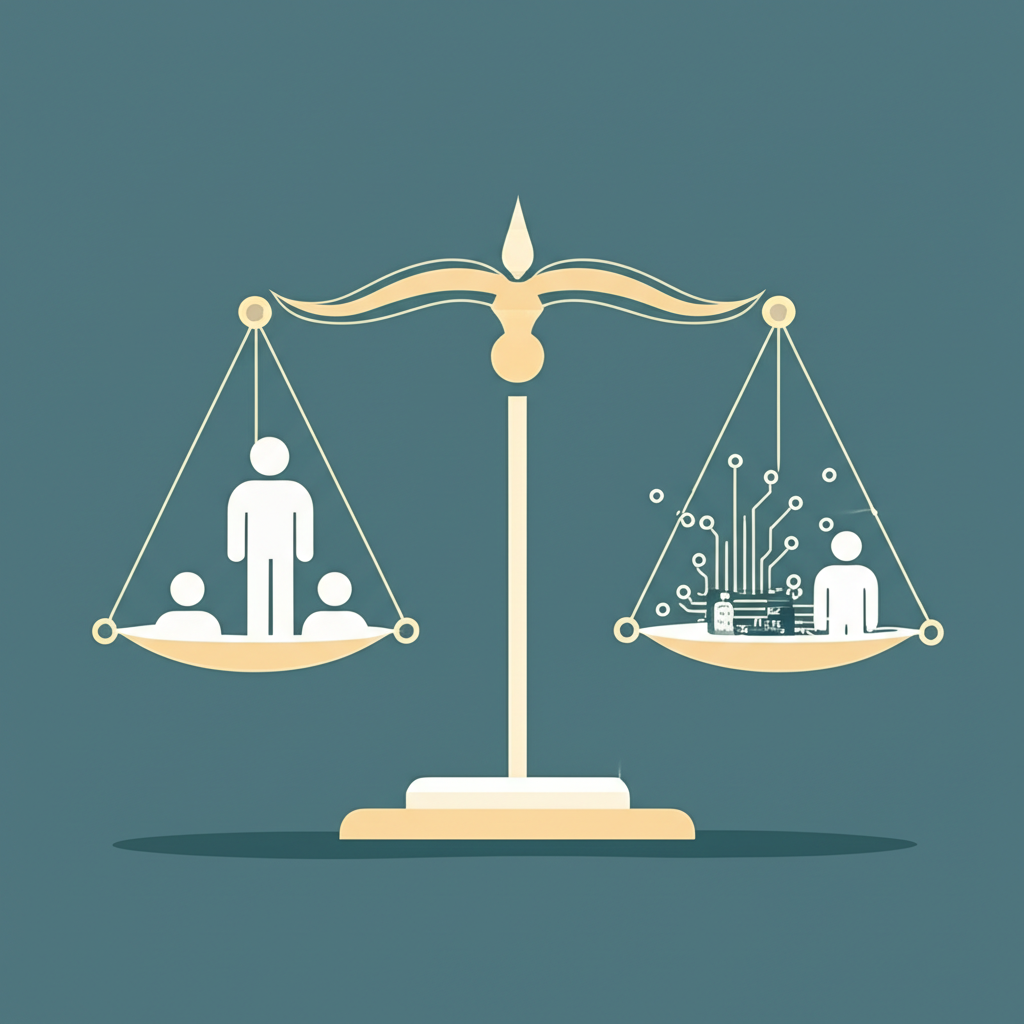
Navigating the Ethical Labyrinth: A Responsible Path for AI Development
Artificial Intelligence (AI) is rapidly transforming our world, promising unprecedented advancements in various fields, from healthcare to transportation. However, with great power comes great responsibility. As we continue to push the boundaries of AI, it's crucial to address the ethical implications and ensure responsible development. This isn't just about avoiding negative consequences; it's about actively shaping AI to benefit all of humanity.
One of the primary concerns is bias. AI algorithms are trained on data, and if that data reflects existing societal biases (related to gender, race, socioeconomic status, etc.), the AI will perpetuate and even amplify those biases. This can lead to unfair or discriminatory outcomes in areas like loan applications, criminal justice, and hiring processes. To mitigate this, we need diverse and representative datasets, rigorous bias detection methods, and explainable AI models that allow us to understand how decisions are made.
Transparency and Explainability are also paramount. Black box AI systems, where the reasoning behind a decision is opaque, erode trust and make it difficult to identify and correct errors or biases. We need to develop techniques that make AI decision-making processes more transparent and understandable, allowing us to hold AI systems accountable.
Privacy is another critical consideration. AI systems often rely on vast amounts of personal data, raising concerns about data security, surveillance, and the potential for misuse. Robust data privacy regulations and ethical guidelines are essential to protect individuals' rights and prevent the abuse of AI technology.
Furthermore, we must consider the impact of AI on employment. As AI automates tasks previously performed by humans, there's a risk of job displacement and increased inequality. We need to proactively address this challenge by investing in education and retraining programs, exploring new economic models, and ensuring a just transition for workers affected by AI-driven automation.
The responsible development of AI requires a multi-stakeholder approach. Researchers, developers, policymakers, and the public all have a role to play. We need to foster open dialogue, establish ethical frameworks, and promote education and awareness to ensure that AI is developed and deployed in a way that aligns with human values and promotes the common good. This includes:
- Developing ethical guidelines and standards: Establishing clear principles and guidelines for AI development and deployment.
- Promoting AI literacy: Educating the public about AI and its potential impacts.
- Investing in research on AI ethics: Exploring the ethical challenges of AI and developing solutions.
- Fostering collaboration: Encouraging collaboration between researchers, developers, policymakers, and the public.
The path forward requires continuous vigilance and a commitment to ethical principles. By prioritizing fairness, transparency, privacy, and accountability, we can harness the immense potential of AI while mitigating its risks and ensuring a future where AI benefits all of humanity.