ERP Systems: Integrating Front and Back Office for Business Success
In today's competitive business landscape, efficiency and data-driven decision-making are paramount. Enterprise Resource Planning (ERP) systems have emerged as crucial tools for businesses of all sizes, providing a centralized platform to manage and streamline operations. At its core, an ERP system integrates back-office and front-office applications, fostering seamless communication and collaboration across different departments.
What is an ERP System?
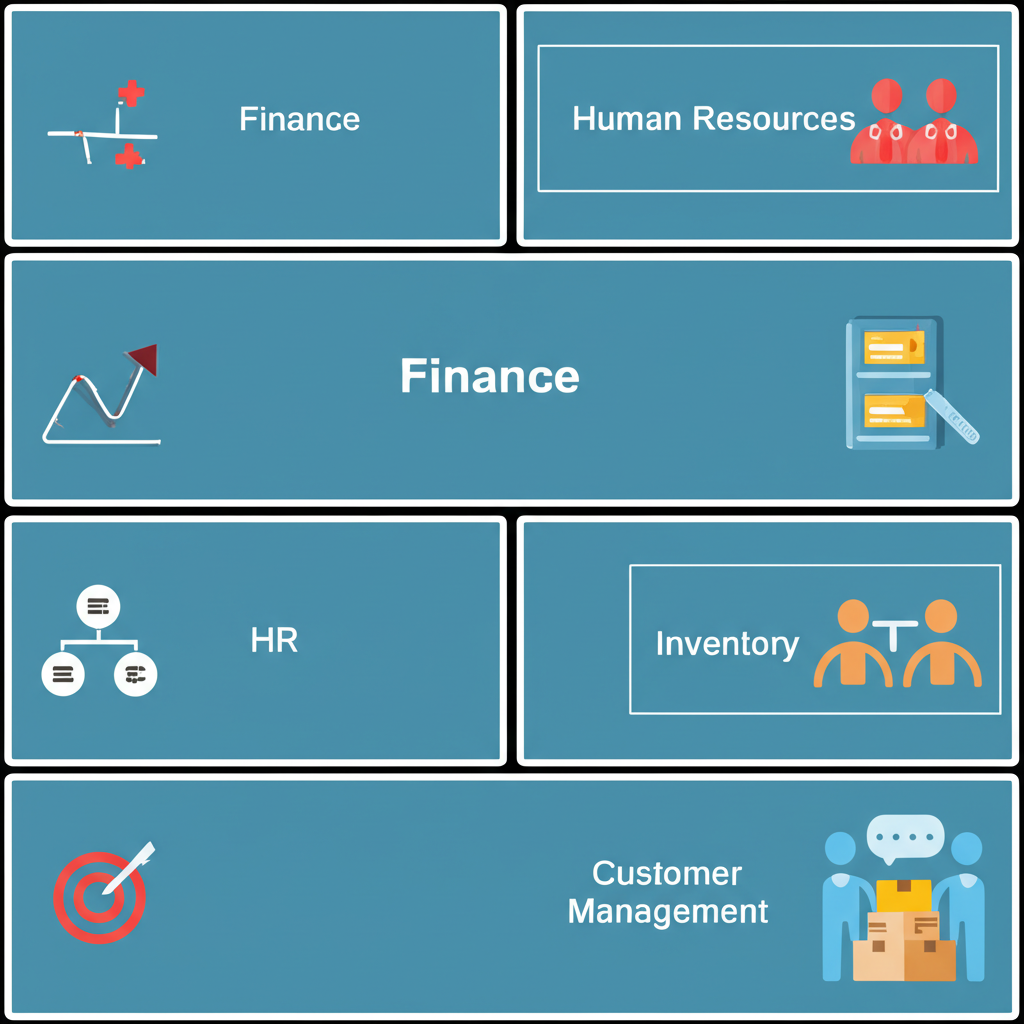
An ERP system is a comprehensive software solution that integrates various business functions, such as finance, human resources, manufacturing, supply chain management, customer relationship management (CRM), and more. By centralizing data and automating processes, ERP systems provide a unified view of the organization, enabling better decision-making and improved efficiency.
How ERP Systems Help Businesses:
- Improved Data Visibility: ERP systems eliminate data silos by centralizing information in a single database. This allows businesses to gain a holistic view of their operations, track key performance indicators (KPIs), and identify areas for improvement.
- Enhanced Efficiency: By automating repetitive tasks and streamlining workflows, ERP systems free up employees to focus on more strategic initiatives. This leads to increased productivity and reduced operational costs.
- Better Decision-Making: With real-time access to accurate data, businesses can make informed decisions based on facts, not gut feelings. ERP systems provide powerful reporting and analytics tools to identify trends, patterns, and opportunities.
- Improved Customer Service: By integrating CRM with other business functions, ERP systems enable businesses to provide personalized and efficient customer service. Sales teams can access customer information, track interactions, and resolve issues quickly.
- Streamlined Supply Chain Management: ERP systems help businesses optimize their supply chain by tracking inventory, managing orders, and coordinating logistics. This leads to reduced lead times, lower inventory costs, and improved customer satisfaction.
- Enhanced Collaboration: ERP systems facilitate collaboration between different departments by providing a common platform for communication and information sharing. This improves teamwork and reduces the risk of errors.
- Compliance and Security: Modern ERP systems come with robust security features and built-in compliance tools to help businesses meet regulatory requirements and protect sensitive data.
Integrating Front and Back Office Applications:
One of the key benefits of ERP systems is their ability to integrate front-office and back-office applications. This means that data flows seamlessly between customer-facing departments (such as sales and marketing) and internal operations (such as finance and manufacturing).
For example, when a sales order is placed in the CRM module (front office), the ERP system automatically updates inventory levels in the warehouse (back office) and triggers the production process (back office). This eliminates manual data entry, reduces errors, and ensures that everyone is working with the most up-to-date information.
Conclusion:
ERP systems are essential tools for businesses that want to improve efficiency, reduce costs, and gain a competitive edge. By integrating front-office and back-office applications, ERP systems provide a unified view of the organization, enabling better decision-making and improved collaboration. As businesses continue to face increasing challenges, ERP systems will play an even more critical role in driving success.